
thomas mccorry constellation

Behind the Metrics: The Metric Stack Trap

Every organization builds a metric stack — a layered system of KPIs, dashboards, and reports designed to translate strategy into measurable outcomes. In theory, the metric stack creates clarity. In practice, it often creates confusion. The Metric Stack Trap is what happens when organizations add metrics faster than they align them. Leaders assume that more […]

Read More

Behind the Metrics: The Forecast Theater

Every organization has a forecasting process. Numbers are gathered, models are updated, and leaders present their projections with confidence. But behind the spreadsheets and slide decks, something else is often happening — something subtle, cultural, and deeply human. Forecasts stop being strategic tools and start becoming performances. This is Forecast Theater — the ritualized process […]

Read More

Behind the Metrics: The Capacity Illusion

Every organization believes it can do more than it actually can. Leaders set ambitious goals, teams commit to aggressive timelines, and roadmaps expand faster than resources. On paper, everything looks achievable. In reality, execution slows, priorities collide, and teams quietly stretch themselves thin. This gap between perceived capacity and actual capacity is the Capacity Illusion […]

Read More

Behind the Metrics: The Noise Problem

Modern organizations are drowning in data. Dashboards multiply, reports expand, and every function produces its own metrics. Leaders have more information than ever before — yet decision-making often feels harder, not easier. The problem isn’t a lack of data. It’s the overwhelming amount of noise that surrounds it. The Noise Problem is the growing gap […]

Read More

Behind the Metrics: The Assumption Stack

Every metric tells a story. But behind every metric, there is something more fragile and more powerful than the number itself: the assumptions that created it. Revenue forecasts, pipeline coverage, capacity plans, hiring models, ROI calculations — all of them rest on an invisible structure of beliefs about how the world works. That invisible structure […]

Read More

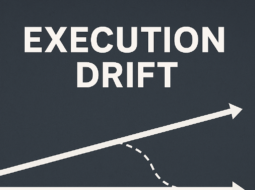
Behind the Metrics: The Execution Drift

Every organization has a plan. Strategies are documented, dashboards are built, and leaders align on priorities. On paper, everything looks coherent. But somewhere between planning and delivery, something subtle happens: teams drift. Not dramatically, not maliciously — but consistently. Small deviations accumulate, assumptions shift, and the organization slowly moves away from its intended path. This […]

Read More

Behind the Metrics: Operating Leverage

Operating leverage is one of the most powerful—and misunderstood—forces in business. It’s the hidden multiplier that determines whether growth translates into profitability or magnifies risk. When managed well, operating leverage accelerates returns. When ignored, it exposes fragility. At its core, operating leverage measures how fixed costs interact with revenue. Companies with high fixed costs—factories, software […]

Read More

Behind the Metrics: Forecast Accuracy

Forecasts are everywhere in business. Revenue projections, pipeline estimates, budget allocations, demand curves—they fill board decks and investor updates. Leaders rely on them to make decisions, allocate resources, and set expectations. Yet one critical metric is almost always missing: forecast accuracy. Forecast accuracy measures how close your predictions come to reality. It’s not glamorous, and […]

Read More

Behind the Metrics: The Efficiency Paradox

Efficiency is one of the most celebrated virtues in business. Leaders strive to cut waste, streamline processes, and maximize output with minimal input. Dashboards light up when utilization rates climb, cost per unit falls, or overhead ratios shrink. Efficiency feels like progress. It looks like discipline. It signals control. But efficiency can also be a […]

Read More

Behind the Metrics: Lagging vs. Leading Indicators

Most dashboards are backward-looking. They tell us what happened—revenue last quarter, churn last month, margin last year. These are lagging metrics: outcomes of decisions already made, systems already in motion. They’re essential for accountability, but they don’t help you steer. Leading metrics, on the other hand, are predictive. They signal what’s likely to happen next. […]

Read More