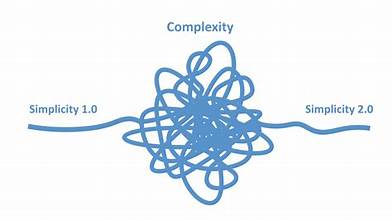
Organizations don’t drift into chaos — they drift into complexity. Every new hire, new tool, new process, and new initiative adds friction. None of it feels dramatic in the moment. But over time, the system becomes heavier, slower, and harder to navigate.
Complexity is the default state of every growing organization. Simplicity is the leadership intervention.
The Real-World Example
A SaaS company grows from 20 to 200 employees in three years. Each team adds its own tools, workflows, dashboards, and reporting structures. Marketing uses one analytics platform. Product uses another. Sales has three. Finance builds its own spreadsheets because none of the dashboards match.
Onboarding stretches from 10 days to 90. Decisions slow. Meetings multiply. Leaders feel like they’re pushing a boulder uphill.
Nothing “broke.” Complexity just accumulated — quietly, relentlessly.
When the CEO finally brings in an outside operator to diagnose the slowdown, the conclusion is simple: “You don’t have an execution problem. You have a complexity problem.”
Why Complexity Always Wins
Complexity wins because it grows faster than clarity. It grows automatically. It grows invisibly. And it grows with good intentions.
1. Every Team Optimizes Locally
Teams choose tools and processes that work for them — not for the whole system.
2. Processes Accumulate, Rarely Retire
New processes get added. Old ones never get removed.
3. Leaders Add Before They Subtract
New initiatives stack on top of existing ones.
4. Growth Outpaces System Design
What worked at 20 people collapses at 200.
5. Complexity Feels Like Progress
More dashboards, more metrics, more structure — it all feels productive.
But complexity doesn’t announce itself. It just quietly slows everything down.
The Cost of Complexity
Complexity is expensive — not because it costs money, but because it costs momentum.
Slower Decisions
More people, more steps, more approvals.
Inconsistent Execution
Teams interpret processes differently.
Lower Accountability
When ownership is unclear, follow-through erodes.
Burnout
People work harder just to maintain the system.
Strategic Drift
Leaders spend more time managing complexity than driving outcomes.
How to Fight Complexity
Complexity can’t be eliminated — but it can be managed. The key is intentional simplification.
1. Standardize Where It Matters
Not everything needs standardization — but the core operating system does.
2. Remove Before You Add
Every new initiative should require the retirement of an old one.
3. Consolidate Tools
Fewer tools = fewer workflows = fewer failure points.
4. Create a “Single Source of Truth”
If teams use different data, they make different decisions.
5. Simplify Decision Paths
Reduce approvals. Push decisions down. Clarify ownership.
6. Audit Processes Quarterly
Ask: “What can we remove, streamline, or automate?”
The Board’s Lens
Boards often see the symptoms — slow execution, inconsistent reporting, unclear narratives — but not the underlying complexity. Boards can help by asking:
- “Where has complexity increased faster than capability?”
- “What processes or tools can we retire?”
- “How many steps does it take to make a decision?”
- “Where do teams experience friction?”
Boards that challenge complexity strengthen the entire operating system.
Final Thought
Complexity is not a sign of sophistication. It’s a sign of drift. Organizations that simplify move faster, execute cleaner, and build systems that scale.
Because in the end, complexity grows automatically — simplicity must be led.