
Blog

Operating Truth: Priorities Don’t Matter Without Tradeoffs

Every leadership team believes they have priorities. They hold offsites, build roadmaps, create OKRs, and publish quarterly goals. But priorities only matter if they come with tradeoffs. Without tradeoffs, priorities are just a list — and lists don’t drive execution. Focus isn’t created by naming what matters. Focus is created by naming what won’t get […]

Read More

Operating Truth: Speed Is a Cultural Choice, Not a Process

Organizations love to talk about speed. They invest in new tools, new workflows, new project management platforms, and new operating models — all in the name of moving faster. But speed rarely comes from process. Speed comes from culture. Fast organizations aren’t fast because they have better tools. They’re fast because they have norms that […]

Read More

Operating Truth: People Don’t Resist Change — They Resist Uncertainty

Leaders often assume that teams resist change. They don’t. People change jobs, cities, technologies, habits, and even identities throughout their lives. Humans are wired for adaptation. What people actually resist is uncertainty — unclear expectations, shifting narratives, inconsistent communication, and the fear of what change might mean for them. Change is not the problem. Ambiguity […]

Read More

Operating Truth: Complexity Always Wins Unless You Simplify

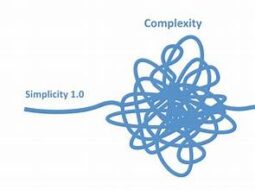
Organizations don’t drift into chaos — they drift into complexity. Every new hire, new tool, new process, and new initiative adds friction. None of it feels dramatic in the moment. But over time, the system becomes heavier, slower, and harder to navigate. Complexity is the default state of every growing organization. Simplicity is the leadership […]

Read More

Behind the Metrics: The Decision Debt

Every organization carries debt. Financial debt. Technical debt. Operational debt. But there is another form of debt that accumulates quietly, invisibly, and often far more dangerously: Decision Debt. Decision Debt is the backlog of decisions that were delayed, avoided, or made without full clarity. It builds up when leaders postpone choices, defer tradeoffs, or leave […]

Read More

Behind the Metrics: The Accountability Fog

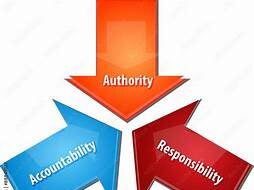
Every organization depends on accountability to turn strategy into execution. But accountability is rarely lost in a single moment. It erodes gradually, quietly, and often invisibly. The result is a subtle organizational condition that leaders feel long before they can diagnose it. This is the Accountability Fog — the slow blurring of ownership, expectations, and […]

Read More

Behind the Metrics: The Prioritization Mirage

Most organizations believe they have priorities. In reality, they have lists — long lists of initiatives, projects, and goals that all compete for the same limited capacity. The belief that naming priorities is the same as making tradeoffs is the Prioritization Mirage. The Mirage creates the illusion of focus while teams quietly drown in competing […]

Read More

Behind the Metrics: The Confidence Gap

Every forecast, roadmap, and strategic plan contains two layers: what teams know and what they are willing to commit to. The difference between those two layers is the Confidence Gap — the space between data and conviction. The Confidence Gap shapes forecasts, influences execution, and determines how honestly teams communicate risk. It is one of […]

Read More

Behind the Metrics: The Decision Latency Problem

Organizations spend enormous energy gathering data, building dashboards, and aligning on strategy. But there is a hidden factor that quietly determines whether any of it matters: the speed at which decisions are made. Not the speed of work — the speed of choice. This is the Decision Latency Problem — the delay between when an […]

Read More

Behind the Metrics: The Metric Stack Trap

Every organization builds a metric stack — a layered system of KPIs, dashboards, and reports designed to translate strategy into measurable outcomes. In theory, the metric stack creates clarity. In practice, it often creates confusion. The Metric Stack Trap is what happens when organizations add metrics faster than they align them. Leaders assume that more […]

Read More